




July 22, 2007
West Gate staying open for next year
Sunday, July 22, 2007
By Bill Hess
Herald/Review
CANELO – A little more than two months from the permanent closure of Fort Huachuca’s West Gate, residents of the rural area west of the post got a reprieve.
The gate will continue to be open 24 hours a day, every day of the year, through Sept. 30, 2008.
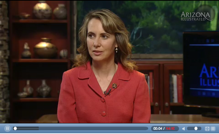
Making the announcement to more than 70 residents was U.S. Rep. Gabrielle Giffords, who was joined at the meeting in the Canelo Cowboy Church by the fort’s new garrison commander, Col. Melissa Sturgeon.
Noting the Army was making an exception to its national policy designed to close little-used gates on Army posts, Giffords said a senior civilian leader of the service said the exception recognizes problems closing the gate would have on the West Gate community.
In making the announcement, Giffords said she was going “to cut to the chase” and provide the good news. After telling it, she was warmly applauded.
One man in the audience said he thought she had called the meeting “to give us bad news.”
Earlier this year Army officials notified the fort’s garrison commander, then Col. Jonathan Hunter, to close the gate because the amount of traffic was far less than standards.
An appeal by fort officials allowed for the gate to be open at reduced hours for a time, until Giffords established a connection with Assistant Secretary of the Army for Installations and Environment Keith Eastin to find a solution to the impasse.
Eastin redirected some Army funds to keep the gate open all day through the end of the current fiscal year, which is Sept. 30.
Eastin wrote Giffords on Tuesday to say justification exists to continue to keep the gate open, noting “the situation at Fort Huachuca is without parallel at any other Army installation.”
Giffords noted that Eastin said no other community outside an Army post would be as impacted by closing a gate as would Fort Huachuca.
“Making an exception to policy is a very big deal for the Army,” the congresswoman said.
Concerned about the lack of access to available health care and emergency services, as well as cutting off the only road from the area outside the West Gate for residents to travel to Sierra Vista for a multitude of services, led to the creation of an unofficial group calling itself the West Gate Community Alliance, which fought to keep the entrance open.
At the beginning of the meeting, emotions ran high. But as progress was seen, the residents saw potential for a solution.
As part of the temporary solution earlier this year that kept the gate open through this September, Eastin told Giffords he would have another survey of the gate situations, which would include a review of similar complaints expressed at other Army installations.
In late May, Col. Joel Himsl, with a small entourage, came to the fort and gathered information from post officials, as well as Cochise and Santa Cruz county elected officials and individuals from federal agencies who also had expressed concerns about the gates closure.
Himsl met with area residents at the church. Hunter and Maj. Gen. Barbara Fast, who at that time was the commander of the Intelligence Center and Fort Huachuca, were at the meeting.
The man in charge of the survey heard some of the same concerns expressed to Giffords and others.
While Himsl was not the decision maker, he said “these are valid concerns … real life stories” that would be in his report.
For Ross Romeo, the unofficial leader of the resident’s alliance, knowing the Army will keep the gate open for another year will give the residents and Giffords time to work on a permanent solution.
“I’m relieved,” he said.
He and others had good words for the freshman congresswoman for quickly working on the problem and keeping the community informed at each step.
For Sturgeon, who took over the garrison about a month ago, Saturday’s trip to the area outside the West Gate was her first.
Promising to work with the community, the colonel said everyone must keep in mind that there will be bureaucratic stumbling blocks.
In May, Himsl indicated he thought a solution to the financial problem – it is estimated the Army spends $300,000 a year to keep two guard on the gate, 24 hours a day – could be sharing of costs with other federal agencies, such as the U.S. Border Patrol and U.S. Forest Service, whose officials have indicated access through the gate at all hours is critical to their operations.
Giffords said a problem that will have to be overcome is the lack of ability for one federal agency to pay another. She believes there may be a way to address that through Congress.
Click here to read the article in the Sierra Vista Herald