




September 29, 2007
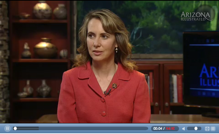
Bush signs Giffords’ bill to speed safer drugs to market
Saturday, September 29th, 2007
By Teya Vitu
The Tucson Citizen
U.S. Rep. Gabrielle Giffords’ first bill signed into law potentially paves the way for getting safer drugs to the market faster.
President Bush on Thursday signed the The Safe and Effective Drug Development Act of 2007, which started as the Tucson Democrat’s H.R. 2592. This bill allows for the establishment of more collaborations among the U.S. Food and Drug Administration, universities and nonprofits to improve the testing process of medical products.
Giffords crafted her legislation while working closely with Ray Woosley, chief executive of the Tucson-based Critical Path Institute, the nation’s first university-private sector nonprofit partnership given the task of finding ways to reduce the 12-year average time to get a drug to the market.
C-Path was established here in 2005 by the University of Arizona, the FDA and SRI (formerly the Stanford Research Institute).
“We’re the model” for Giffords’ bill, Woosley said. “This bill puts a stamp of approval for what we created.”
Woosley welcomes more critical path institutes.
“There is so much work,” he said. “We need all the help we can get.”
Giffords announced the act’s approval Friday at the Arizona Cancer Center.
The act “encourages the establishment of a neutral territory within which companies can work together and share their experiences with each other and the (FDA) scientists,” she said.
Woosley said C-Path, in its first two years, has matched 160 scientists from the nation’s 16 biggest pharmaceutical firms with FDA scientists.
The direct interaction between industry and government – which had not happened before – will lead to faster approvals and safer drugs, he said.
Trudi Willcox Wood, 55, endured many years of clinical trials to treat her ovarian cancer until doctors locked onto a drug combination including Avastin that has had the best success. She said Avastin was created in the 1970s but did not get FDA approval until 2004.
“It took from the 1970s to the 2000s to get me the drug,” Wood said. “Cancer patients need new drugs to address cancer and they need them more quickly.”
David Alberts, director of the Arizona Cancer Center, illustrated the urgency to get new drugs approved faster by describing the cancer death toll as “the equivalent of three 747s (crashing) full of patients every single day.”
The legislation also increases the user fees pharmaceutical companies pay the FDA to have their drugs reviewed.
“This will allow the FDA to charge additional money for safety monitoring when the new drugs are on the market,” Woosley said.
C-Path next week will announce a $2 million grant from the Science Foundation of Arizona for C-Path to work with Ventana Medical Systems in Oro Valley to find better ways to use drugs with diagnostic equipment, Woosley said.
Click here to read the article in the Tucson Citizen