June 22, 2010
Quick to take a shot, Paton misses the mark.
CD 8 Republican primary candidate Jonathan Paton has launched an ill-informed and misguided attack on Gabrielle Giffords for her work to save the lives of servicemembers and countless taxpayer dollars by strengthening the U.S. Defense Department’s long-term strategic energy position in Iraq and Afghanistan.
Paton, the longtime payday lending lobbyist and former state legislator, was so quick to attack Giffords on Monday that he misspelled “soldiers” in his sloppily written release. More importantly, he completely fails to understand why our nation’s top military leaders consider our dependence on fuel a strategic disadvantage, particularly in Iraq and Afghanistan.
Our military’s “umbilical cord”
The Army Counterinsurgency Field Manual Gen. David Petraeus developed in 2006 states that stable electricity is a vital element to defeating the insurgency, a point he reiterated multiple times at the hearing. Crucial too is the military’s ability to sustain itself and access the supplies they need to keep going.
Arizona National Guardsman Mark Cardenas saw firsthand the dangers of our military’s dependence on fuel. Cardenas guarded more than 4,000 miles of convoys during his 15-month deployment to Iraq that began in August 2006. “Energy independence for the military is important to me because the vast majority of the convoys I guarded were fuel convoys. They were not food or supplies to help the troops do their jobs. This dependence on fuel wastes our resources, puts thousands of soldiers in danger everyday and does nothing to advance our strategic missions. There is a better way to do this overall, and that is by freeing ourselves of this leash so our military can go do the job they were sent to accomplish.”
Even Osama bin Laden recognizes the threat posed by our military’s dependence on fuel supply, calling oil our military’s “umbilical cord” and telling terrorists to “focus your operations on oil, especially in Iraq and the Gulf area, since this will cause the [Americans] to die off.”
The Defense Department’s renewable energy initiatives began in earnest in 2007 at the urging of top military commanders. In numerous reports, military leadership expressed great concern about the strategic disadvantage placed upon our military by its dependence on fuel and a vulnerable electrical grid, including:
· Troops and military facilities are hamstrung by the dangerous process of supplying and transporting fuel deep into theaters of conflict such as Iraq and Afghanistan. Marine Corps General James Mattis, Commander of the 1st Marine Division in Iraq in 2003, issued an urgent needs statement that read “unleash us from this tether of fuel.”
· A 2007 Army report identified that 170 American service members lost their lives guarding fuel convoys in that year alone.
· Everyday, our brave men and women in uniform are diverted from critical work to secure Afghanistan and Iraq to dangerous jobs guarding the thousands of fuel convoys required to supply a constant demand for oil in our conflict regions. “… [I]ncreased use of convoys to transport fuel and water — which account for about 80 percent of the weight of everything the U.S. takes to war — was a root cause of U.S. casualties,” said U.S. Air Force General (Ret.) Chuck Wald said.
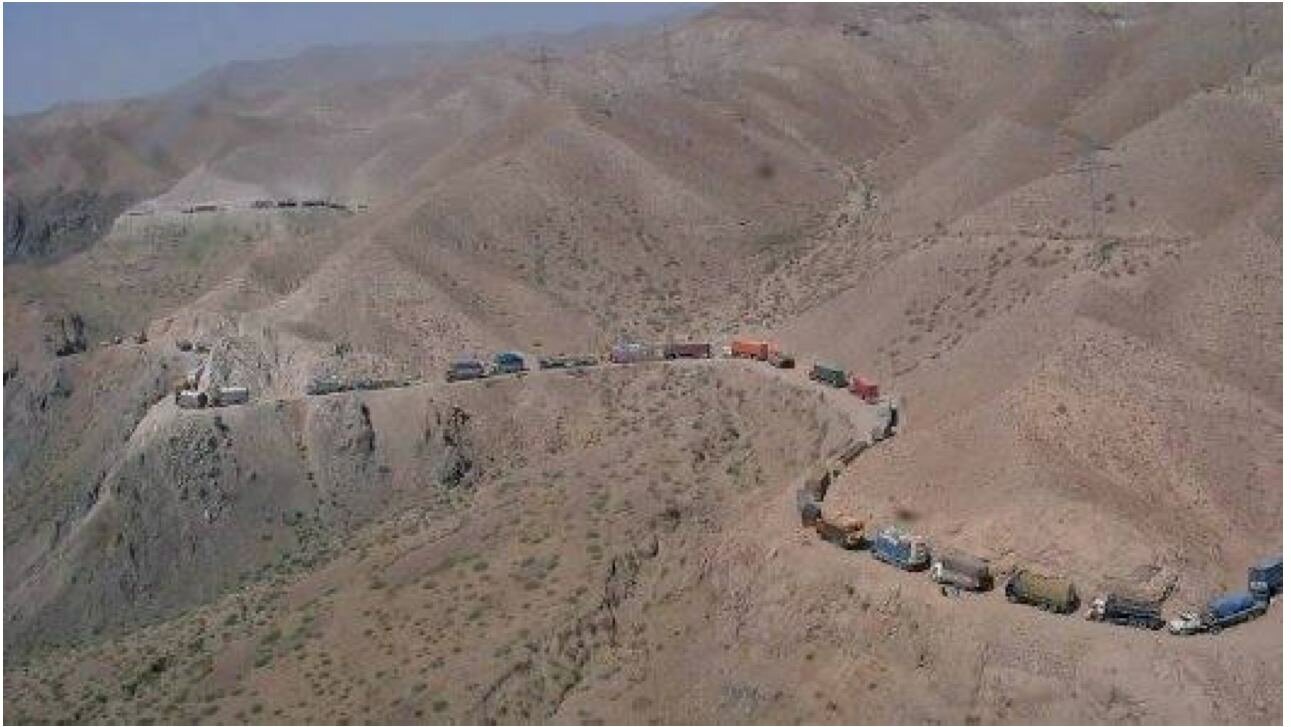
· Fort Bliss Commanding General Maj. Gen. Howard B. Bromberg, who has been a leader in the military’s energy security initiatives, described the burden placed on strategic operations by fuel needs, saying “When we look particularly at Iraq and Afghanistan, looking as we face the [improvised explosive device] threat, and we said, ‘Boy, you’re putting Soldiers at risk and you’re putting Airmen at risk, Sailors at risk, Marines at risk to move one gallon of fuel across the battlefield.’ [It’s] just an evolution of thought as you’re going to look at how the military’s going to operate. And we all know if we can solve some of these logistics problems, I think you could see what the Army does operationally could be far, far different than how we operate today.”
Giffords is doing something about it
Last month, after listening to the concerns of top leaders in each of the military branches and the Office of the Secretary of Defense, Giffords introduced the Department of Defense Energy Security Act (DoDESA) alongside former CIA director R. James Woolsey. This landmark bill codifies many of the Department’s renewable energy initiatives and provides additional resources for this critical national security priority. (“Bill aims to wean defense industry off fossil fuels,” KOLD News 13, 5/11/10.)
“We pay a heavy price for having to move so much energy so much forward under hostile conditions,” Woolsey said when introducing the DoDESA legislation with Giffords. “[Gabrielle] has worked very hard in the Armed Services Committee to move with sensible amendments and proposals to improve the way we use energy and buy energy and what kind of energy we obtain and to move toward greater resilience.”
“As a former Marine Corps general I have seen how our military’s dependence on fuel supply puts serious limitations on the ability to accomplish complex missions and keep our troops safe. America’s military is the strongest, most effective military in the world, and we should not be limited by the reach of supply lines when there are better, more efficient, more cost effective technologies out there. Our military and service members need more advocates like Gabrielle Giffords who will fight for them in Congress,” Marine Corps General John Cronin (Ret.), the former Commanding General of the 4th Wing and former Commanding General of Marine Corps Base Quantico said.
Always “listening to the Generals”?
Paton’s hasty and irresponsible criticism of Giffords for her questions to General Petraeus about the military’s energy initiatives reveals Paton is more concerned with scoring a cheap political victory than taking serious steps to protect our strategic military interests and the lives of American service men and women.
“We applaud and thank Mr. Paton for his service to his country,” Giffords for Congress Communications Director Anne Hilby said. “But as a veteran he should know that servicemembers’ lives are too important for politicians and pundits to play fast and loose with the facts. Paton’s disregard for the safety of our troops in pursuit of a partisan attack speaks volumes about the values he would bring if elected to office.”
As someone who claims to always “listen to the Generals” and a veteran himself, Paton would do well to put partisan politics aside and join Gabrielle in this fight to protect our soldiers.
In the House Armed Services Committee and at home in Southern Arizona, Giffords remains committed to working hard every single day for our military and our men and women in uniform. This includes voting for the new Post-9/11 G.I Bill to send our service men and women to college; overhauling the VA so it has the capability to treat complex 21st century injuries and adapt to the needs of our women veterans; and supporting the military’s goals to reduce fuel dependence so it can become increasingly agile, more secure from attack and able to direct resources to the front lines where they are needed most.
All one has to do is a quick Google search to learn that this issue is critical to our nation’s military readiness.
###