




July 24, 2010
Hopes fade for border funds
by Bill Hess
Sierra Vista Herald
Add-ons to war funding bill blamed for defeat in Senate
The demise in the U.S. Senate of more than $700 million for border security brought reaction Friday from both sides of the political aisle.
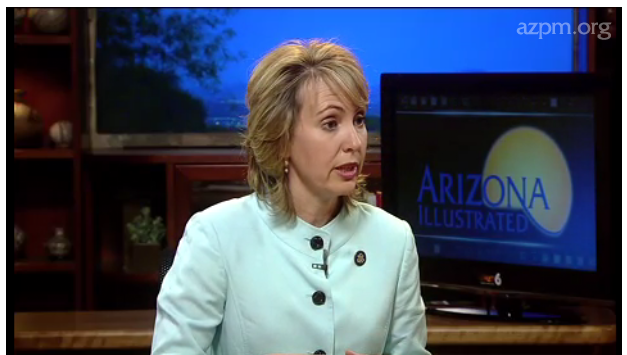
Arizona Democratic U.S. Rep. Gabrielle Giffords said she was appalled by Senate action on a House bill that includes the extra money for border security.
“Southern Arizonans should be appalled that the United States Senate said no to supporting our troops on the border, said no to protecting the ranches in my district who are threatened daily and said no to increasing Border Patrol agents who would help stop the flow of drugs and illegal immigrants into our country. Arizonans repeatedly have said they want stronger border security, and senators yesterday turned their backs on them,” she said Friday.
Arizona Republican U.S. Sen. John McCain said the $80 billion supplemental bill has more than $20 billion of add-ons by House members to the detriment of fiscal responsibility.
“I will concede that some of this funding may be necessary. But it should not be added to a must-pass bill to fund our troops, and it should be fully offset. … The supplemental also contains the president’s request for increased personnel and technology to improve border security; however, the House made several changes that are detrimental to Arizona’s border security and our nation’s homeland security,” he said.
Giffords and McCain are running for re-election, and both have made border security a key issue in their campaigns. The congresswoman has a TV ad involving Cochise County residents and their safety concerns. Along Interstate 10 are billboards touting McCain’s involvement in finding solutions to the border problem.
While Giffords and McCain will not face each other since they serve in different congressional chambers, the two-term congresswoman said the $701 million for border security in the supplemental appropriations bill was passed July 2 by the House on a 239-182 vote.
In the Senate, the bill was defeated, with 51 senators voting no and 46 voting yes. The four Democratic senators in California and New Mexico voted for it. The four Republicans representing Arizona and Texas were opposed.
Giffords said the long-awaited deployment of National Guard forces to the border — with Arizona getting 524 of 1,200 troops — was supposed to be helped by additional nonmilitary individuals and equipment that were to be part of the $701 million.
Calling the success of the Guard deployment now “in doubt,” Giffords said the troops “were intended as a bridge until additional agents from the Border Patrol are hired, trained and in place. The Senate action removes funding for those additional agents, raising questions about the effectiveness of the Guard deployment.”
The increase in violence south of the U.S. border with Mexico and the ”brazen actions” of those involved in drug cartels has led to incidents spilling across the international boundary to include the death of a Douglas-area rancher, Giffords said.
“And it is commonplace to see heavily armed drug runners coming across ranch land and into the communities of Southern Arizona,” said Giffords, whose Arizona 8th Congressional District includes Cochise County.
She said she sought additional funding after violence increased in Mexico and because agents in the Tucson Sector of the Border Patrol deal with 47 percent of the illegal immigrants in the entire country along with large amounts of drugs.
In a speech before the Senate ahead of the vote, McCain mentioned many of the add-ons to the bill, the main purpose of which is to provide additional funds to support U.S. forces in combat. He said the add-ons would increase the budget deficit.
When it comes to the supplement for increased personnel and technology along the border, he said, “The president’s announcement of additional personnel and resources to the Southwest border is a step in the right direction. However, a lot more needs to be done, including making the deployment of federal agents permanent.”
It was wrong to add to the bill important needs to secure the border, he said.
“Such funding for border security should not be included in a war supplemental bill but instead be considered in the regular order where amendments are able to be considered,” McCain said.
Saying he supports President Barack Obama in rescinding $100 million for the “failed virtual fence,” he said he does not support the House’s actions to cut an additional $100 million which would go to completing a real border fence.
Now, with the defeat of the bill and the stripping out of all items not involving supplemental funds to support forces in Afghanistan and Iraq, the measure will be sent to the House for a vote without amendments being allowed.
AT A GLANCE
In defeating the war supplemental bill in the Senate on Thursday night, 45 Democrats and one independent voted for it and 39 Republicans, 11 Democrats and one independent voted against the proposal. Two Republicans and one Democrat did not vote.
The $60 billion war supplemental bill saw the price go up by nearly $23 billion added by members of the House of Representatives, including:
• $10 billion for education jobs programs.
• $4.95 billion for Pell grants.
• $701 million for border security.
• $180 million for emergency loans.
• $163 million for schools on military installations.
• $142 million for the Gulf oil spill.
• $50 million for Emergency Food Assistance.
• $16.5 million for a new soldier processing center at Fort Hood, Texas.
• Other programs.
The $701 million for beefing up border security along the international boundary with Mexico included more than $208 million for 1,200 additional Border Patrol agents, $201 million for Justice Department programs and temporary deployment of special investigative teams and attorneys, prosecutors and immigration judges, $136 million for 500 additional officers at ports of entry, $50 million for grants to support local law enforcement agencies, more than $35 million for improved tactical combinations and three BP forward operating bases, $32 million for an additional two unmanned surveillance aircraft and $30 million to add customs agents.