More on Healthcare
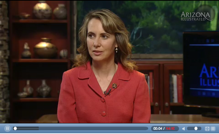
Giffords: Health-care reform is our moon shot
Friday, July 31st, 2009Arizona Daily Star - July 26, 2009
By U.S. Rep. Gabrielle Giffords
SPECIAL TO THE ARIZONA DAILY STAR
Last month, a Tucson father who was desperate called my office.
His wife has cancer. One of his young daughters has an incurable disease. He was recently laid off and lost his health insurance.
This father was forced to find three new jobs to make ends meet — including one that offered health insurance. But coverage for his family was denied because of their pre-existing medical conditions.
Now his daughter hasn’t had treatment for her illness in more than nine months and the family has lost their home to foreclosure.
There can be no doubt that our health care system is failing us. Premiums have doubled in the last nine years, increasing three times faster than real wages. We are spending too much, receiving too little and are left worrying that the insurance we have won’t be enough.
Unless we do something, 14,000 Americans will lose their health insurance today — just as 14,000 Americans lost their health insurance yesterday and 14,000 more Americans will lose their health insurance tomorrow.
We are great nation. We deserve the best health care in the world.
We need reform that puts patients first. It is not right and not fair that insurance companies can deny coverage because of pre- existing conditions or impose lifetime limits on service.
I support reform that allows Americans to keep their current health-care program, keep their doctors and keep their hospitals.
I support reform that creates competition through a strong public option that lowers everyone’s costs and competes with private insurers.
I support reform that allows Arizonans who lose their jobs to afford insurance so they can get back on their feet without fear of getting sick.
I support reform that will slow the growth of health-care costs and does not impose new taxes or burdens on our nation’s most valuable economic contributors, small businesses.
I support reform that would allow this father to keep his insurance so his daughter and wife don’t have to go without proper care.
Last week, this nation observed the 40th anniversary of humans’ arrival on the moon — one of the most awesome accomplishments in the history of mankind. Now our generation has our own opportunity to make history.
A nation that can leave footprints on another celestial body is up to this challenge.
Providing Americans with health care that gives them lifetime security and peace of mind must be America’s next great accomplishment.
Giffords summarizes health bill to constituents: complicated
Friday, July 31st, 2009Green Valley News
By Philip Franchine
Published: Tuesday, July 28, 2009
Congresswoman Gabrielle Giffords spoke to about 350 people Monday night in a telephonic question and and answer session, telling them that the 1,600-page health care proposal facing Congress is so complicated that constituents may want to consult a 60-page summary that is available in her office and on her Web site.
The Congresswoman took a handful of questions from those who were listening in and her responses summarized the proposal. Questions focused on whether the proposal is like the single-payer Canadian system (no, she said, it builds on our current system); how it would affect small busineses (would require those with payrolls above $250,000 to offer health insurance or face penalties); how it would affect Medicare (complicated); how it would affect retired military personnel (very little, she said).
The big question came last in the hour-plus session: how would the $1 trillion-plus system be financed. The answer to that, she said, is complex, but includes a tax on the top 1.2 percent of households — couples with an adjusted taxable income of $350,000 a year or individuals with an adjusted taxable income of $290,000. Giffords said some families might have a gross incomes of $1 million or more, but a taxable income of only $350,000. The tax would affect about 4,000 households in District 8, according to a district-by district fact sheet document filed on her Web site, www.giffords.house.gov.
A list of fact sheets, summaries and other documents related to the health care proposal is online at http://energycommerce.house.gov/index.php?option=com_content&view=article&id=1687&catid=156&Itemid=55.
It includes district by district impacts in all congressional districts. For example, the document says District 8 health care providers gave $69 million in uncompensated care in 2008. The fact sheet does not say how much of that amount would be addressed by the legislation facing Congress, as much of the uncompensated care was for illegal border crossers who may not be affected by the legislation.
Former Surgeon General Richard Carmona of Tucson also spoke, saying that a huge proportion of America’s health care cost are for preventable conditions, including obesity and diabetes. Giffords said the proposal would encourage preventive care. Carmona said the United States spends far more on health care thatn other countries with poorer outcomes.
Fixing U.S. health system is vital, Giffords says
Thursday, July 30th, 2009Sierra Vista Herald
July 28, 2009
By Bill Hess
SIERRA VISTA — “America’s health care system is sick,” Democratic U.S. Rep. Gabrielle Giffords said Monday night during a telephone town hall meeting.
Congress must triage the ailing medical system, and that is the purpose of the current health care debate, she said.
If the issue is not addressed, Americans will find themselves lacking the financial means to take care of their medical needs, the Arizona 8th Congressional District congresswoman remarked.
If the nation’s health care system is not overhauled, one out of every five taxpayer dollars in the next decade will go to health care, and within 30 years, it will be one out of three, Giffords told more the nearly 5,000 people who listened on the first ever districtwide phone hookup.
The number of participants came from a computer-generated count, said C.J. Karamargin, Giffords’ press secretary.
The congresswoman said insurance companies are more concerned about their financial bottom line, and the proposed health care legislation would not only help that industry but also save money for the government and individuals.
The proposed legislation “has a strong public option, (so) we would compete with insurance companies to bring down the cost of health care,” Giffords said.
However, late Monday, The Associated Press reported a bipartisan group of senators want to have the public option removed.
Joining her, to provide a professional health care provider’s take on the issue, was Dr. Richard Carmona, who served as U.S. surgeon general for four years in Republican President George W. Bush’s administration. Carmona is currently a distinguished professor at the Mel and Enid Zimmerman College of Public Health at the University of Arizona.
Saying the future is clear in that the country can no longer support the current health care system, Carmona said more emphasis must be placed on preventive medicine instead of “sick care.”
The proposed overhaul would provide better emphasis on preventive medicine so that in the future, programs are not just about taking care of sick people, he said.
“Access, quality and costs are the three important spheres,” Carmona said.
But to pass the needed legislation, both Democrats and Republicans, as well as those in the health industry, must work together, he said.
Much of today’s health care “incentivizes” the financial bottom line to the detriment of quality over quantity, Carmona said.
One listener asked if the United States was heading north to have a system like Canada.
The Tucson woman said eventually the United States could end up with a single-payer system under which there is rationing of medical treatment.
Giffords said, “The Canadian model is not being considered at this time,” an expression she used four times in responding to the question.
When Karamargin was queried after the hourlong event, he said Giffords is on the record of being against a single-payer program in which the government would decide all issues.
He noted that Michigan Democratic U.S. Rep. John Conyers has introduced a bill with 85 co-sponsors calling on the United States to have a single-payer plan and that the Arizona congresswoman did not sign on to the proposal.
“The congresswoman does not support a single payer,” Karamargin said.
In her response to the question about the Canadian system, Giffords said when it came to that government’s program, “rationing care is not right.”
Arizona Democratic U.S. Rep. Gabrielle Giffords answered a number of questions concerning the proposed national health care issue during a Monday evening telephone town hall meeting.
A military retiree from Sierra Vista asked the congresswoman if TRICARE would be eliminated under the proposed legislation. Giffords said it is not in either the House or Senate bill, and she will not support any proposal that would eliminate the special program for the military.
Asked what benefits small business owners would have, she said the proposed bill would not only help business owners but also employees by reducing costs.
Business owners would be able to become involved in an insurance exchange program that would help lower their costs as well as co-payments and deductibles for employees, the congresswoman said.
Also joining her was former Surgeon General Dr. Richard Carmona, who had a number of thoughts in supporting the national health care proposal. He served as the nation’s top doctor during the administration of Republican President George W. Bush from 2002 to 2006.
A supporter of individuals practicing better health care, Carmona said he sees the proposed bill putting more emphasis on preventive medicine “rescuing people from their own bad behaviors.”
During the phone event, two surveys were taken.
To the question if anyone listening had been denied or a family member had been denied medical insurance for a pre-existing condition, 22 percent said yes.
Asked whether those listening were insured by their employers or self-insured, the responses were 68 percent employer-insured and the rest purchased their own health insurance.
According to news reports, even though the president is pushing for health care legislation to be completed before Congress takes its August recess, the Democratic leadership in the Senate has said this bill will not be considered until after Congress resumes after Labor Day.
It also appears the House will not address the issue until after the recess, although that chamber’s leadership had been pushing for it to be done this week.
Up Close: Congresswoman Gabrielle Giffords
Friday, July 17th, 2009Arizona Capitol Times, July 10, 2009
By Jeremy Duda
Between the recent cap-and-trade bill and the alternative energy provisions of the stimulus act, U.S. Rep. Gabrielle Giffords has seen some of her top priorities take center stage in Congress this year.
But with issues like comprehensive immigration reform and a massive health care overhaul on the horizon, Giffords and her colleagues have a lot on their plates, and there are no obvious answers. On health care, Giffords is talking to constituents, listening to the experts and even hobnobbing with the president in search of the best solution.
In a telephone interview that required a half-dozen breaks so Giffords could run back out to the House of Representatives floor to vote, Arizona’s motorcycle-riding Blue Dog Democrat spoke with the Arizona Capitol Times about energy independence, Congress’s ambitious agenda and whether Arizona can look forward to another stimulus package.
What is the likelihood that there will be a second stimulus act, and would you support one?
At this moment I’d like to see the stimulus dollars distributed to the states, put into action and the jobs actually created. The stimulus bill that we passed a few months ago was about an $800-billion piece of legislation, and approximately 40 percent of the bill went for tax cuts, but a significant amount went into reinvesting in our nation’s infrastructure.
A lot of shovel-ready projects were funded, as well as our education system, including community colleges and universities, also the K-12 system, and a lot of our research institutions that had been underfunded for many, many years. So at this point, I don’t believe that members of Congress have an appetite to pass an additional stimulus bill until we actually see the dollars in the first bill distributed to the states and the jobs created that we had anticipated.
How effective do you think the first stimulus act has been?
I think in some ways it’s been effective in terms of allowing the American people to know that these resources are being made available. The challenge right now is that the money has been very slowly distributed to the states, or the states have not, because of their own budget crises, not been in a situation, like in the case of Arizona where we haven’t actually been able to pass a budget, been able to take advantage of those dollars.
So I know that additional funding to the science agencies has been helpful. I know that, in terms of states shoring up their overall budgets, they can look to the federal dollars and know that they’re there. But the reality is that we’d like to speed up the process. So like I said, going back to passing another stimulus, at this point in time we need to make sure the first stimulus works before we add an additional piece of legislation.
What more can the federal government do to help the economy recover?
Obviously we’re fighting two wars right now, so in terms of redeploying our troops from Iraq and assisting the Iraqi people to secure their nation so that we can leave that country, we are refocusing a lot of our efforts on Afghanistan. The resources that have gone toward these wars have been very large, so not having to spend that money in Iraq and Afghanistan – or specifically in Iraq. Afghanistan’s budget is not nearly as (big) as Iraq’s – that will be important.
The best way that we are going to get out of this crisis is by re-growing our economy. And looking at manufacturing in this country and trying to keep a solid infrastructure – for example, the auto industry – was something that we thought was a priority from the national security standpoint, and also from an economic standpoint.
Now, I voted against the auto bailout bill because I didn’t believe the auto companies had provided sufficient information or a good enough plan. … But now that we are a majority shareholder in GM and Chrysler, we’re talking about really millions of jobs when it comes to the indirect effects of the auto industry. So one (way the federal government can help) is looking at manufacturing in this country and those sorts of jobs.
When you understand that right now we are exporting about $400 billion a year to pay for foreign oil, being able to produce America’s energy in America not only will save us money when it comes to the investments that we’re making abroad and the money that we have to borrow in order to secure those energy sources, but the money that we could create by taking advantage of this new energy revolution. And that’s one of the reasons I’m so passionate about solar energy.
And the third way is the money that we’re planning to save with health care. Right now, approximately one in every five dollars spent in our economy goes toward health care. So one of the reasons we’re having such a vigorous debate right now on health care reform is because we have close to 50 million Americans who don’t have health care. The leading cause of bankruptcy in our nation is because of health-related emergency. We spend well over 50 percent more than the next country behind us when it comes to costs associated with health care. Yet almost 50 million Americans don’t have access to it, and another 20 million are currently underinsured. So in terms of helping our economy as well, having a healthy work force is absolutely critical.
What type of health care system would you like to see passed by Congress? Do you support a public option?
Right now, because I’m not on any of the three committees with jurisdiction, I’m currently weighing in through my involvement with the Blue Dog Coalition, and also through the New Democrats. And right now we’ve seen a couple of drafts and we’ve had meetings almost morning, noon and night on health care reform. I’m weighing in largely from the perspective I’ve gathered from my constituents. I had a health care town hall a couple weeks ago where we had over a thousand participants.
Arizona has some really unique challenges. We’re directly on the border. We are disproportionately impacted with the costs of illegal immigration. We have a large retirement community. And my district has a lot of lower-income individuals. So the challenges associated with us in Arizona are just different than the folks in Connecticut.
One of my top priorities is no matter what we do that it’s paid for, that we don’t push the bill off on future generations. My second top priority is that if we do something that it encompasses all Americans, that we don’t rack up a $1.5 trillion bill that will only cover 11 million additional Americans.
That’s not acceptable.
Obviously cost will be a major issue in the debate. How can we pay for health care reform?
As a Blue Dog, I’m very committed to PAYGO. The president has said that he’s committed to PAYGO. So that will be one of the largest obstacles that we will have to deal with if we’re going to pass something out of the House with support from the Democrats.
And I also feel strongly that the bill has to be bipartisan. Health care should not be a partisan issue. Democrats and Republicans should work together on this legislation and own this legislation.
The recent vote on cap-and-trade legislation, the American Clean Energy and Security Act, split Arizona’s Democratic delegation, with Reps. Ann Kirkpatrick and Harry Mitchell voting against it. Why did you vote for the bill?
This legislation has the ability to – and it’s a broad piece of legislation – to truly transform our dependency on foreign oil. It’s critical to our national security.
Arizona is a real winner in this legislation. In CD8, the cost of this legislation, and this is after the 2012 implementation, will be about 46 cents a day, and the efficiency that we’re looking at saving will be a household reduction by 2020 of over $130. It’s also estimated, because of our solar resources and wind and other renewables, that the potential is to create 30,000 jobs in this state. I look at it as a jobs bill and a national security bill as well.
And there’s a lot of emphasis on new technology. For example, a piece of legislation that I worked on last year is called ARPA-E, and it’s modeled after DARPA, which was the Defense Advanced Research Projects Agency. It was the agency that developed the Internet and developed the stealth bomber. Some of the coolest stuff that we’ve ever developed in this country has come out of DARPA, and this agency, which will be housed in the Department of Energy, is very similar. It’s for the most cutting-edge advanced-energy research.
I was also able to add language into the bill that will be very helpful for increasing the use of renewable energy resources by the federal government, because currently about 80 percent of the energy used by the federal government is used by the Department of Defense.
In the big picture, I’m concerned about climate change. And instead of increasing this deficit, the energy act, American Clean Energy and Security Act … is deficit neutral, and it requires the polluters who are currently emitting dangerous carbon emissions to pay. Also included in the legislation are some provisions for rural communities and farmers, folks that I have over in the eastern part of my district, to be able to generate new incomes as well. So I look at this as a bill that will protect consumers and will help Arizona really lead.
What do you think Congress should in regard to the upcoming debate on comprehensive immigration reform?
I was very pleased to have been invited to the White House two weeks ago to be part of the president’s initial discussion on immigration reform. And what the president said is if he has any political capital left over after health care and after the energy vote, that he would put it toward a comprehensive immigration reform bill.
I was really pleased to see both Senator McCain and Senator Kyl at that meeting, because I think they have been and hopefully will be instrumental in passing a comprehensive bill. Even though you don’t hear about the problems with immigration, the problems are still there. Last year, the Tucson sector of the Border Patrol, and I represent part of that area, apprehended 319,000 illegal immigrants. It’s slightly down from around 389,000 the previous year.
So we have the most heavily trafficked part of the U.S.-Mexico border. And because I represent four counties very close to the border, I feel very strongly that the federal government needs to step up and take responsibility for the enforcement of our immigration laws and reimbursing local entities for costs associated with the government’s failure to secure the border.
That includes SCAAP (State Criminal Alien Assistance Program) funding, and we were successful last year when SCAAP provided $17.4 million to the Pima County Sheriff’s Office and other local law enforcement agencies. Out of that $17.4 million, the Arizona Department of Corrections received $12.8 million to house approximately 5,600 criminal illegal immigrants. And Ann Kirkpatrick, Harry Mitchell and I also achieved a major victory earlier this year when we got the House’s support on an amendment that appropriated $400 million toward SCAAP.
So I’m optimistic that with Janet Napolitano heading up the Department of Homeland Security that we’re going to see a smarter border policy. So far, the numbers have gone down in terms of the apprehensions. But the problem is still clearly there.
Speaking of our former governor, what do you think of the job Napolitano has done at DHS?
Janet Napolitano is very smart. She has a no-nonsense approach toward the work that she does. She was a very strong governor for the state of Arizona. I’m sorry to have seen her leave during a very difficult time for us here. But I think that settling into her new position at the Department of Homeland Security provides her an entirely new challenge.
Her successor here in Arizona certainly had her work cut out for her. What do you think of the job Jan Brewer has done as governor?
I know that Governor Jan Brewer is working really hard to try to put a budget together, and it’s very difficult dealing with a divided Legislature and a budget deficit as large as the deficit that we have in the state.
I’m concerned about the future of our state. I’m concerned about our public education system and our health care system and the people that rely on having a solid budget. But ultimately, I think Governor Brewer will be strong and I think that she will realize that she is the governor of the state of Arizona and settle better into her role, and lead the state for the time that she has remaining.
Who knows what’s going to happen in 2010 with her running or not running for re-election, but meanwhile there’s a lot of work that needs to be done in the state.
Brewer has run into a lot of opposition to her tax increase proposal. What do you think of the idea?
There are only certain ways to balance the budget, and she apparently did what she thought was an appropriate step. Because I’m not actively involved with the state budget, I’m not clear what the current options are for closing the hole.
You’re considered by many to be a rising star in the Democratic Party in Arizona. Have you considered running for higher office?
At this moment in time I’d just like to hold onto my seat while I have the passion and the energy to work very hard for the people of southern Arizona. I believe that I’m the first southern Arizonan in our history to serve on the House Armed Services Committee, and with Fort Huachuca and Davis-Monthan in the district and Air National Guard and an Army Guard unit as well in southern Arizona, I am very focused on readiness issues that affect the Air Force and also the Army.
So at this point, I’ve got a very tough district, a district that voted for President Bush twice; a district that did not support Barack Obama in the primary or in the general election, and right now I’m just focused on my job. And so far, so good.
UA Experts Lead Off Healthcare Reform Meeting – J. Lyle Bootman and Richard Carmona spoke on health care reform at the Healthcare Town Hall, which drew approximately 1,000 participants
Thursday, May 28th, 2009University of Arizona News, Published May 27, 2009
By Ginny Geib, UA College of Pharmacy
Helping set the stage for a community town hall discussion on national health care reform in Tucson May 26 were Richard Carmona of The University of Arizona Mel and Enid Zuckerman College of Public Health and J. Lyle Bootman of the UA College of Pharmacy.
The Health Care Town Hall sponsored by U.S. Rep. Gabrielle Giffords drew approximately 1,000 Southern Arizonans to Sahuaro High School for a wide-ranging discussion of issues surrounding how health care is financed and delivered in this country. Congress expects to take action “before the August recess” on several legislative proposals, Giffords told the audience.
In responding to the Congresswoman’s invitation to provide overviews of the current state of American health care, Carmona, the most recent U.S. Surgeon General, declared that currently the country has a “perversely incentivized sick-care system” rather than one that supports disease prevention, educates citizens on the consequences of their own behaviors and provides access to quality care to all populations.
Bootman, dean of the UA College of Pharmacy and a member of the National Institute of Medicine, said much of the current debate centers on “whether health care is a right or a privilege.” An estimated 47 million Americans lack health coverage, he said, with the cost of providing services rising from 7 percent of Gross National Product to 16 percent over the last 40 years.
Following up on Carmona’s emphasis on disease prevention, Bootman told the audience that 15 chronic conditions accounted for 56 percent of all increased health care spending over the past 20 years, and that one-third of total health care costs are associated with just five conditions (heart disease, pulmonary diseases, mental health disorders, cancer and hypertension).
Following remarks by Bootman and Carmona, Giffords introduced 14 representatives from Tucson-area business groups, health care providers, nonprofit organizations, community service agencies and other interest groups to share their perspectives.
Topics included examples of the need for better mental health coverage, using case managers more widely to improve access to services, how health coverage affects an employer’s competitive edge in government bids, the inadequacies of health services in rural areas, cost-shifting by payers, reimbursement to providers and the complexity of Medicare plans.
Several presenters supported universal coverage and a greater participation by government in payment and delivery, with one declaring that guaranteed health care is a right. Another presenter drew both applause and disapproval from the audience when he called for patients to pay directly for their services.
Giffords entertained a dozen or so comments from the audience before ending the forum, which lasted more than two hours. One speaker urged the representative to make sure the concerns of family members providing long-term care to loved ones were included in any reform legislation, a physician pointed to the federal employee benefits system and Medicare as models that work well and others argued for the special needs of the disabled, retirees and people with lifelong conditions such as diabetes.